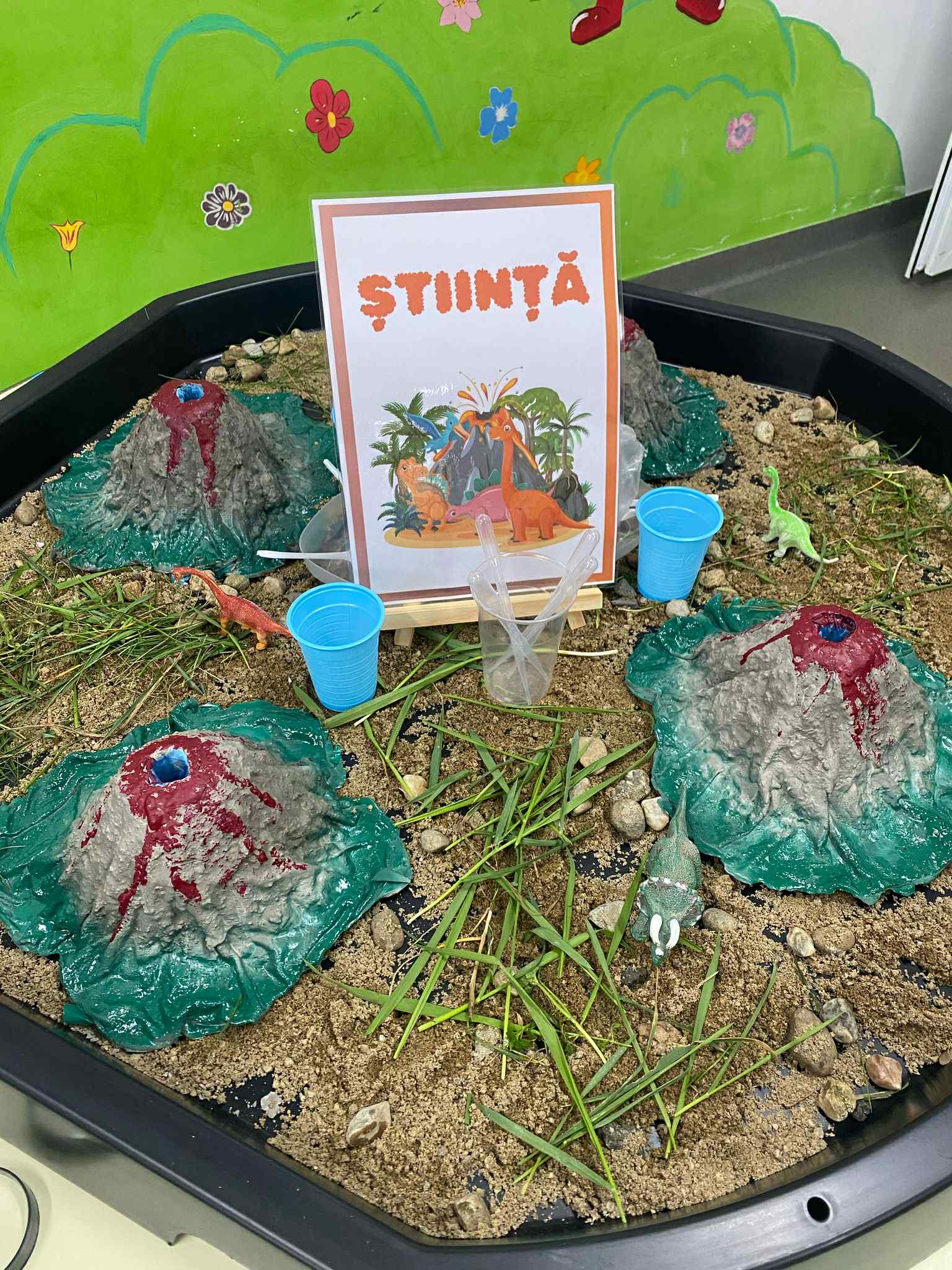
Science experiments are a wonderful way to spark curiosity and help children better understand the world around them. Hands-on activities encourage active participation, critical thinking, and discovery — all essential skills for young learners.
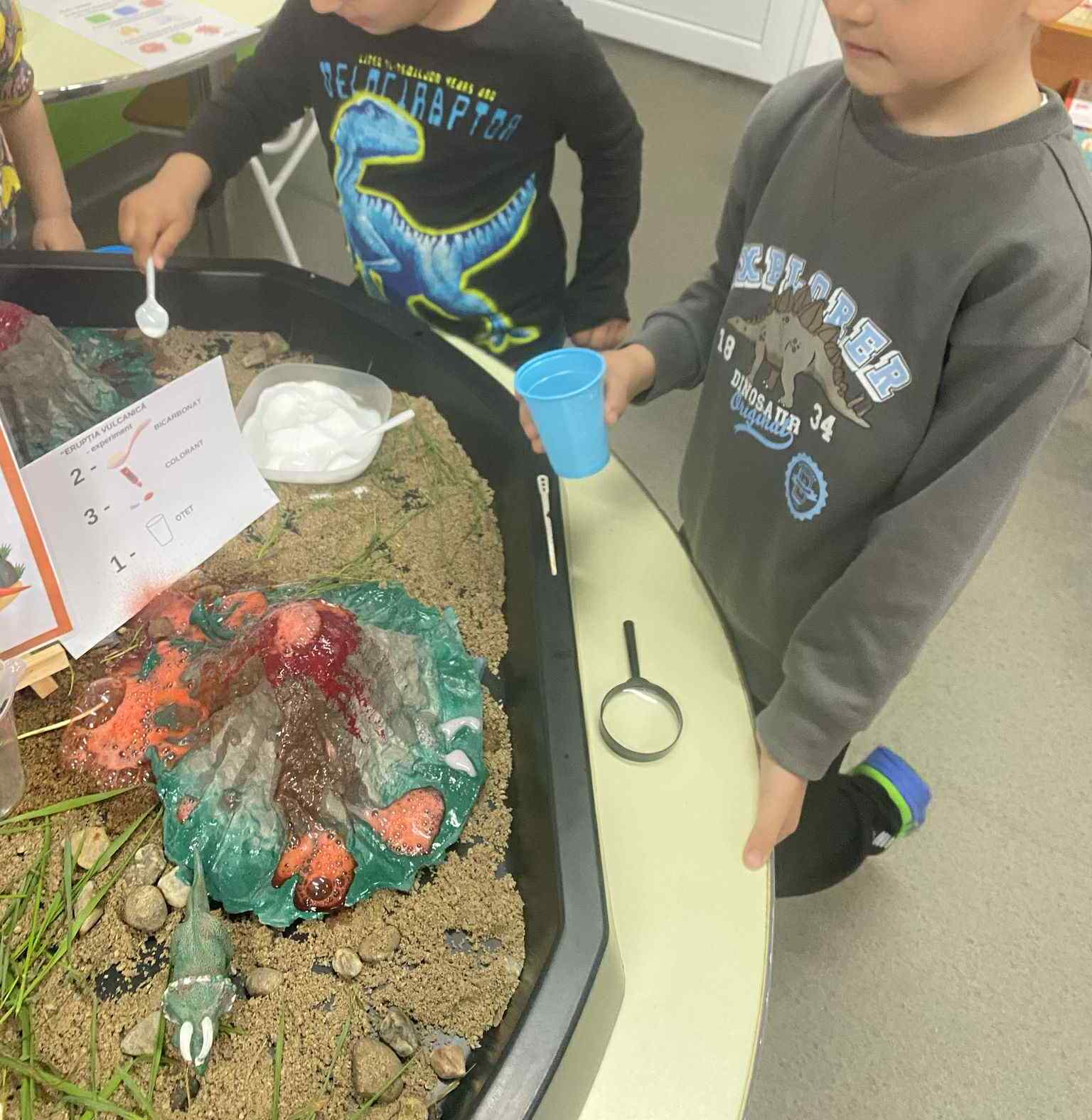
In our preschool group, we conducted a fun and educational volcano eruption experiment as part of the thematic project “Dinosaurs – A Lost World.” This activity allowed children to explore one of the possible causes of dinosaur extinction while engaging in creative construction and scientific observation.
 Why This Experiment Matters
Linking scientific exploration to topics that already fascinate children — like dinosaurs — helps them make meaningful connections. By building and “erupting” their own volcanoes, kids begin to understand natural forces such as volcanic eruptions in a memorable and age-appropriate way.
This experiment supports:
Scientific thinking and observation
Fine motor skills through crafting
Understanding of natural phenomena
Language development through discussion
Teamwork and following instructions
 How We Built Our Volcano Model
We started by crafting the volcano using basic and accessible materials. Here are the steps we followed:
Base structure:
We cut a circle from cardboard. In the center, we glued a piece of cardboard tube from a kitchen foil roll. Because this tube was narrow, we added a second, wider tube (from a toilet paper roll) on top, using hot glue to fix them together.Volcano shape:
Around the central tube, we attached kitchen paper towels from the top down to the cardboard base. We layered and shaped them to form a conical volcano shape.Inner chamber:
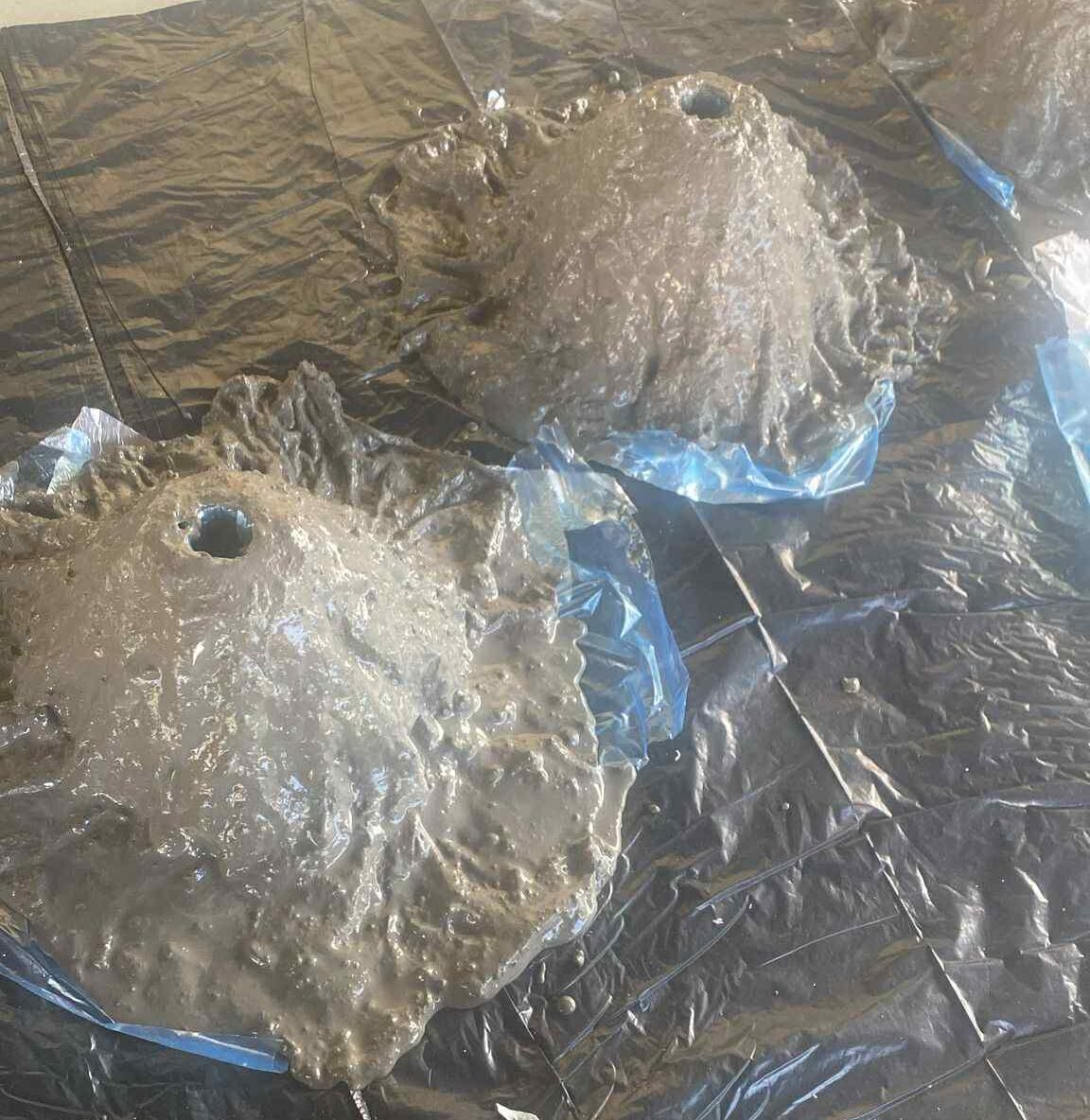
We placed one corner of a plastic bag inside the tube, then stretched the rest of the bag around the paper towel cone. This created a smooth surface and protected the structure.Outer layer:
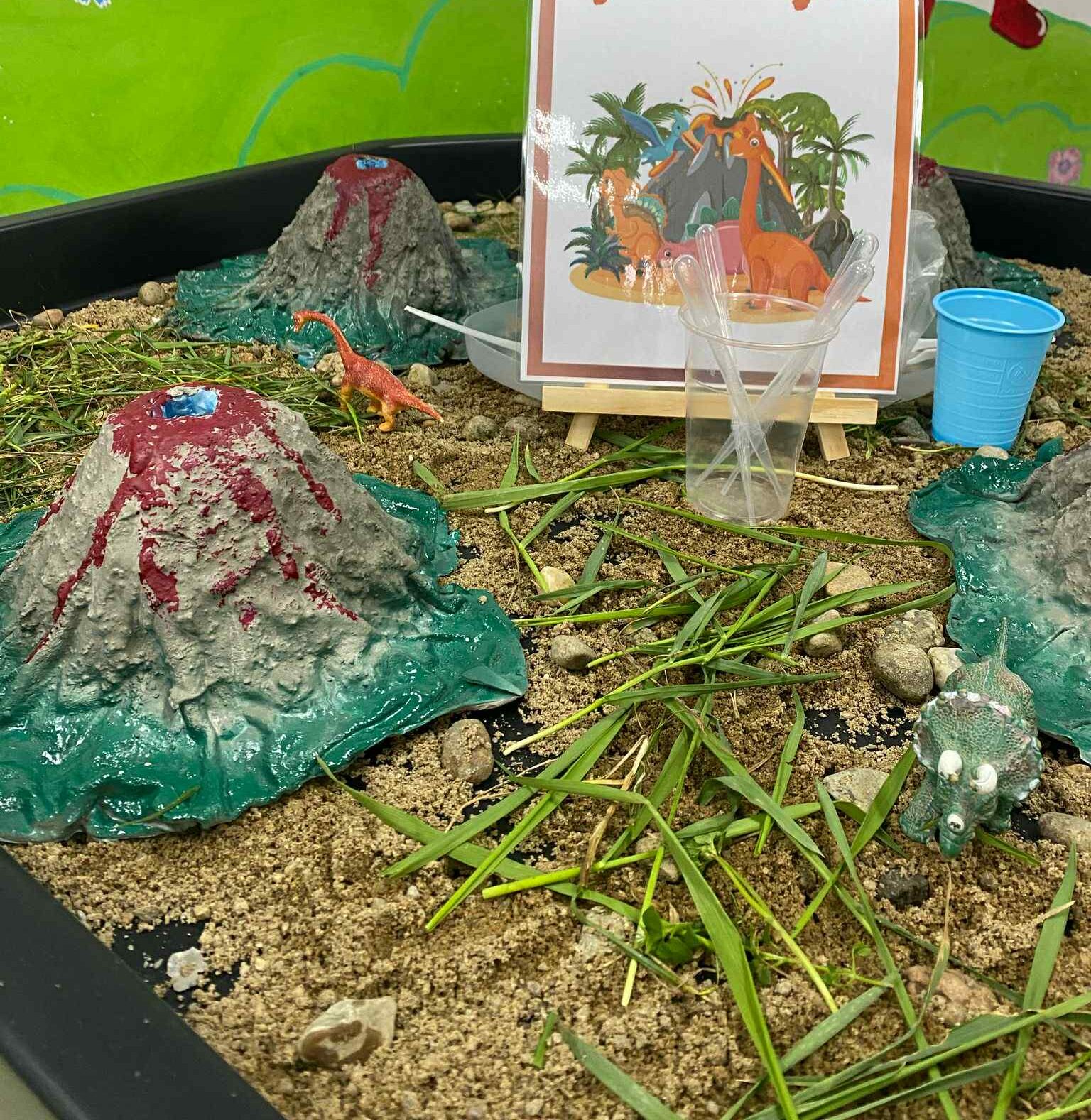
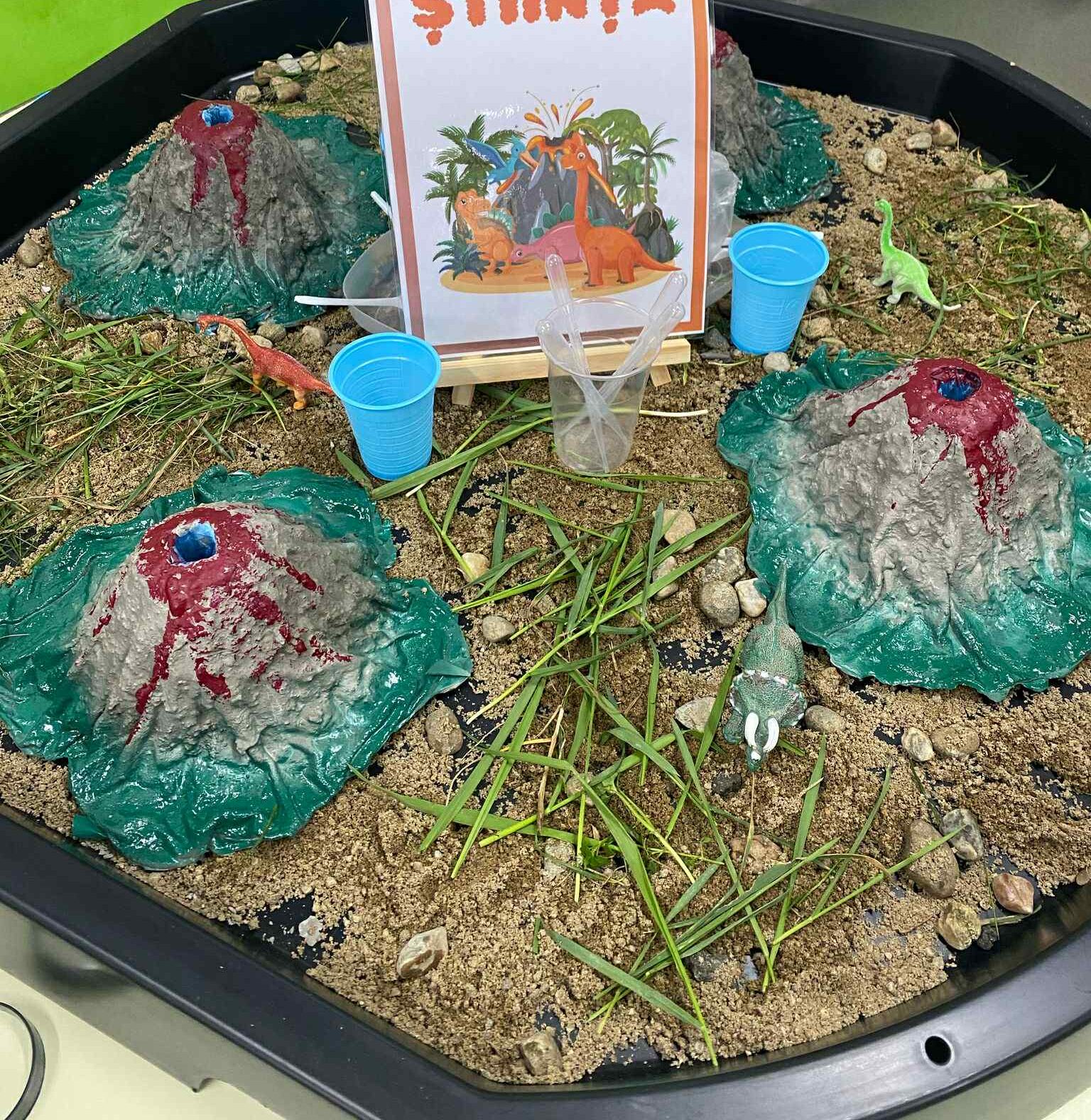
We cut a larger circle from a piece of fabric, making a hole in the middle. We soaked the fabric in a smooth paste made from water and powdered cement, then laid it over the volcano form. After letting it dry completely, we painted the volcano with craft paints.
 The Volcano Eruption Experiment
Once the volcano was ready, we introduced the experiment to the children. Each child received a small instruction sheet with visual steps to guide them through the process.
What You Need:
2 teaspoons of baking soda
1 small cup of white vinegar
2–3 drops of red food coloring
A spoon or funnel for pouring
Steps:
Place baking soda inside the volcano.
Add a few drops of red food coloring to the vinegar (to simulate lava).
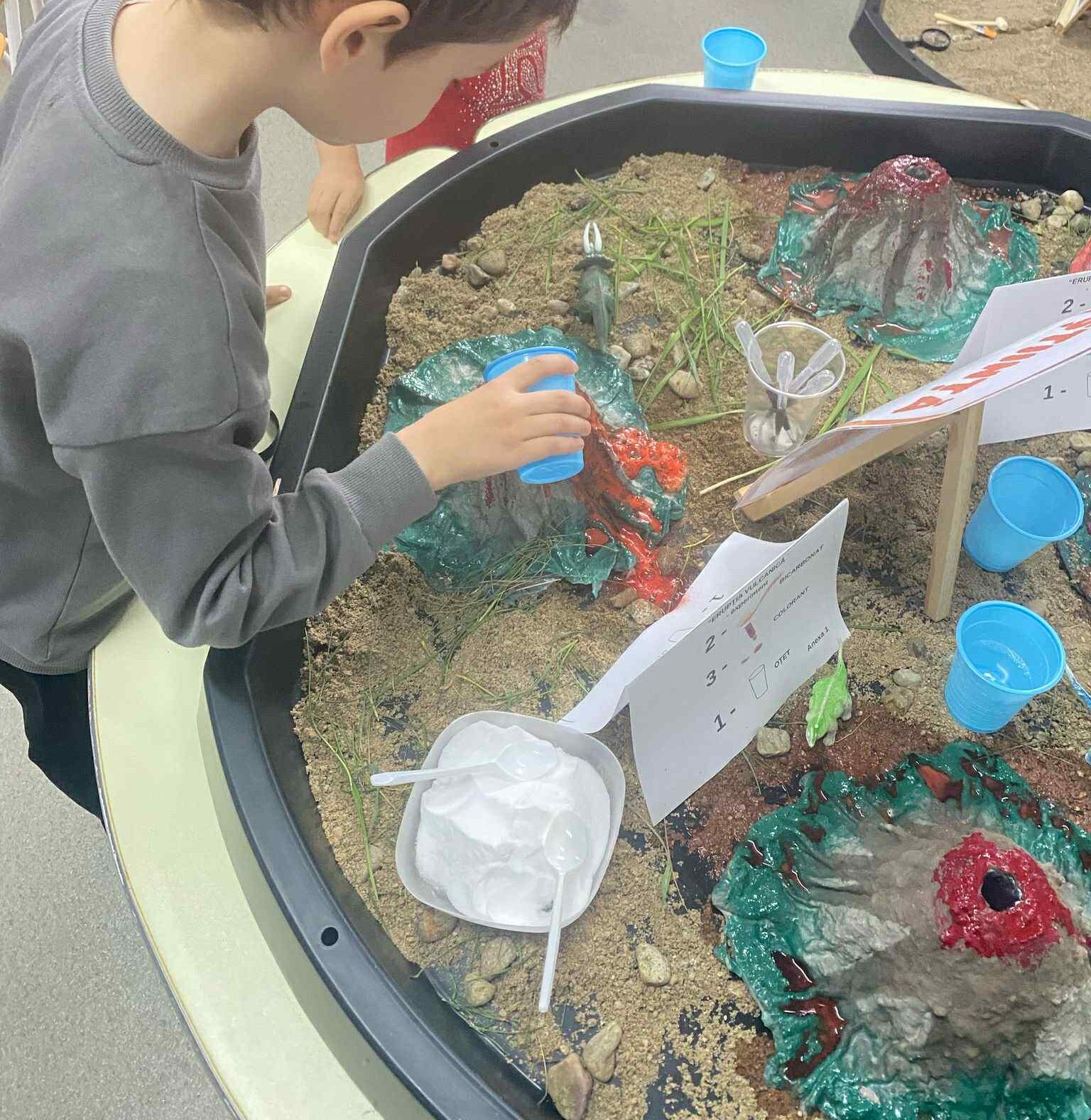
Carefully pour the vinegar mixture into the volcano and watch it erupt!
The excitement on the children’s faces as the red “lava” bubbled over was priceless! This simple experiment became a powerful learning experience, combining art, science, and storytelling.
 Final Thoughts
Science doesn’t need to be complicated to be impactful. With just a few household materials, you can transform a fun activity into an engaging learning opportunity.
Whether you’re a parent or an educator, incorporating hands-on experiments like this one into your day helps children:
Ask questions
Make predictions
Test ideas
Explore cause and effect
And most importantly — it makes learning FUN!
Try it at home or in the classroom — and let your little explorers blast into discovery just like the dinosaurs once did!